What Happens When You Actually Back Innovation (For More Than Five Minutes)
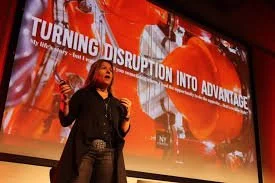
"I would not found one agency - I would found two. I would create a dual agency. 80% of the clients money would be spent in one half - using conventional models and metrics and 20% would be spent on R&D... even exploring new models of human behaviour." Rory Sutherland
An unexpected shout-out from Rory Sutherland sparked this blog. When I saw the clip, it took me straight back to a noisy corner of Ogilvy around 2000, where a small group of us were doing something that didn’t really have a name yet: building what became the Ogilvy Digital Innovation Lab.
It reminded me of three things:
How quickly “mad” ideas become obvious in hindsight.
How fragile real innovation is inside big organisations.
And how, when it is backed, the impact can echo for years.
The Lab: Prototyping the Future Inside a Dinosaur
The Lab was never about theatre.
It existed to challenge assumptions, prototype futures and help clients experience what was coming before it arrived.
That meant:
Bringing early‑stage tech into the room, not just slides about it.
Running experiments at pace, not three‑year “transformations”.
Showing commercial impact, not just “thought leadership”.
We were doing things in the early 2000s that now get rebranded every few years: “labs”, “garages”, “ventures”, “accelerators”. Different stickers, same underlying question:
How do you help a large, successful organisation think and behave like an entrepreneur before the market forces it to?
The answer, then and now, isn’t complicated. It’s just hard:
Protect a small, weird team.
Give them direct access to decision‑makers.
Let them ship real things, not just decks.
Measure outcomes, not hours.
Death by Spreadsheet – and Why That Isn’t the End
As Rory points out in his talk, the Lab eventually fell victim to familiar pressures: spreadsheets, short‑termism, politics, and the timeless fear of anything that doesn’t fit the existing P&L.
Anyone who has built an internal “lab” will recognise the pattern:
It starts as a bold bet.
It proves things that are uncomfortable.
It gets squeezed back into “business as usual”.
Here’s the important bit:
Just because the structure didn’t survive doesn’t mean the work or the mindset disappeared.
A lot of what we were doing — experimentation, behavioural insight, structured visual thinking, seeing customers as humans not segments — quietly found its way into the core of the business. You can see it today in the success of Ogilvy Consulting and the behavioural science practice that Rory, Dan Bennett, Tara Austin and others are leading.
The Lab didn’t “fail”.
It did what good labs are supposed to do:
Change how people think.
Seed new capabilities.
Make the future a bit less abstract and a bit more actionable.
The Real Lesson: Intrapreneurs or Nothing
There’s a bigger learning here for any business navigating disruption.
You don’t get lasting innovation from:
One‑off brainstorms.
Transformation decks.
Hiring a famous consultant for three months.
You get it from intrapreneurs.
People inside the system who:
See what’s coming earlier than most.
Are willing to put their head above the parapet.
Know how to build, pressure‑test and embed new things inside a complex organisation.
That was the spirit of the Lab. It’s the spirit behind Rough Diamond. And it’s the spirit you still see in the best work coming out of Ogilvy’s behavioural science teams today.
If you want innovation that sticks — culturally, commercially, strategically — you have to do three things:
Spot your Rough Diamonds
The restless, curious, slightly awkward people who keep asking “why are we doing it like this?”. They’re not a nuisance; they’re your early‑warning system.Give them protection and permission
Shield them from the corporate antibodies. Give them a clear mandate, some resources, and direct access to senior decision‑makers.Insist on real experiments
Not theatre, not pilots that never leave PowerPoint. Build things. Test them with real customers. Keep what works. Kill what doesn’t. Learn in public.
Why This Still Matters
When I look back at that Lab, I don’t just see nostalgia.
I see a case study in what happens when you:
Back curiosity.
Trust mavericks.
And accept that not everything can be proven upfront on a spreadsheet.
Some structures don’t last.
The mindset does — if you let it.
If you’re leading a team or a business right now, the question isn’t “how do we get an innovation lab?”. It’s:
How do we make it possible for entrepreneurial people inside our organisation to actually do what they’re here to do?
Because if you don’t, the market will eventually answer that question for you.
(For context, here’s the short clip with Rory’s shout‑out that sparked this whole reflection: https://www.youtube.com/watch?v=rUPIZNg61Y4)
Article about the closing of Ogilvy’s Innovation Lab in 2016 - https://www.campaignlive.co.uk/article/ogilvy-labs-shuts-down/1405035 - WATCH THIS SPACE FOR MY NEXT BLOG ABOUT THAT…
